
Many people struggle to maintain a healthier lifestyle. However, those of us with hypothyroidism have a hard time stabilizing our body to regular basis. For many individuals with symptoms like feeling exhausted, sluggish, difficulty concentrating, and unexpected weight gain. There was a point in time of my life my health began deteriorating as fatigue and concentration made it difficult to have what I once considered a nor a typical day. Taking control of my health is vital which has to be planned to maintain a better healthier lifestyle and leads me to start by adopting a cleaner eating habit.
How to live well with Hypothyroidism?
One of the primary roles of your thyroid gland is it controls the metabolism of your body. When the thyroid gland does not produce thyroid hormones, your metabolism slows down making you fell tired and exhausted. Thyroid hormone T3 and T4 controls cellular metabolism throughout the body. When you are talking about boosting your metabolism, you are allowing your body to continue performing efficiently easier to be more energized and lose and maintain your weight. People with hypothyroidism are likely to have unexpected weight because their metabolic rate is slow. In a study, The International Journal of Obesity, “higher BMI (body mass index) associated with higher TSH (thyroid stimulating hormone). (Jacques, 2) The thyroid glands need specific foods and nutrient supplements to regulate hormone production and metabolism properly. Some foods that boost your metabolism include fruits (all the berries including pomegranate, lemon), almonds, oatmeal, vegetables (spinach, asparagus, kale), avocado, meats (fish (salmon), chicken, turkey), eggs, coconut oil, spices (turmeric, ginger, cinnamon, nutmeg), teas (green tea and dandelion tea), and water (6-8 eight ounce cups daily). Please see link: www.globalhealingcenter.com/natural-health/9-best-foods-for-thyroid/ . A nutrient supplement such as Vitamin B12, (helps regulate hormone and
metabolism), Vitamin B6 and C, Selenium (200 mcg daily, Zinc (30mg), Iron, Iodine,
Probiotic (30 billion daily), Alpha Lipoic Acid (600mg daily).
Some factors help control stability for the thyroid gland. An intake of protein contributes to advocate weight reduction and maintain muscle mass. According to the short-term intervention, “studies have often shown positive effect high protein weight reduction diets on glycemic control. Most with in combination with higher weight loss by absorption diet patterns fast protein that is soluble”. (Claessen, Baak, and Monsheimer, et.al, 298) Proteins absorbed into the bloodstream in the form of amino acid and peptide and it’s required for an increase of muscle mass. When you exercise, it’s recommendable to increase protein intake to repair any muscle mass or damage by excessive training. Protein helps out in the growth and repair of your muscles, bones, ligaments, tissues, and even your hair, skin and nails. It also boosts your immune system and maintains the digestion, metabolism, and circulation in function. However, the requirement for the amount of protein intake depends on the durability of the exercise. Protein intake is about 100mg daily. Foods that contain proteins are certain meats (fatty fish, chicken, lamb, turkey), eggs, vegetables (spinach, Brussel sprouts, kale), almonds.
Another essential factor is that your body needs to keep the amount of thyroid hormone regulating, your body relies on the pituitary gland (master gland of the body) which controls several hormone glands and secretes into the bloodstream. The hypothalamus function is to regulate body temperature and PH balance (normal PH is 7). The body works maintaining a standard temperature of 98.6 degrees Fahrenheit which allows maintaining body weight. Alkaline water and coconut water are essential to help with regulation and maintaining body temperature. It is also important to eat foods with antioxidants to build the immune system and improve hormone function. Probiotics supplement can help boost your immune system, improve digestion, and prevent infections.
Maintaining a proper thyroid function would include leveling your cholesterol, blood pressure, body temperature (PH balance), hormones, support excretion of the intestinal tract which can present tremendous challenges due to one suit doesn’t fit all, what works for one person may not work for other. But don’t give up, now you have the challenge to know your body and what works for you. It’s vital for one with hypothyroidism to focus and maintain realistic goals to a healthy change and regular exercise.

Work Cited
Ain, Kenneth B. and Rosenthal, M. Sara. The Complete Thyroid Book. McGraw-Hill Professional. 2011. Electronic Book.
Claessen, M., Baak, Van, and Monsheimer, S., et.al. The effect of a low-fat, high-protein or high-carbohydrate ad libitum diet on weight loss maintenance and metabolic risk factors. International Journey of Obesity. doi: 10.1038/ijo.2008.278. pg. 296 https://www.researchgate.net/publication/23801235. Accessed on 06 Feb. 2017.
Jacques, Jacqueline. The Role of Your Thyroid in Metabolism and Weight Control. Obesity Action Coalition. 06 April 2016. doi: http://www.obesityaction.org/educational-resources/resource-articles-2/general-articles/the-role-of-your-thyroid-in-metabolism-and-weight-control . Accessed on 17 Feb. 2017. pg. 2
 and biology through his high school years. He volunteered at the Mutter Museum at the Philadelphia College of Physician and worked in the summers at the medical labs. Dr. Ain’s third year of medical school, he was under the wings of a new endocrinologist where he learned about endocrinology and thyroid. Later, he specialized in treating patients with dysfunctional thyroid and become the founder and directed the Thyroid Oncology Program at the University of Kentucky in Lexington, Kentucky. Dr. Ain together with his wife, Sara Rosenthal, a bioethics and sociologist, wrote “The Complete Thyroid Book” for the purpose to provide people with information about thyroid disease and how to treat it.

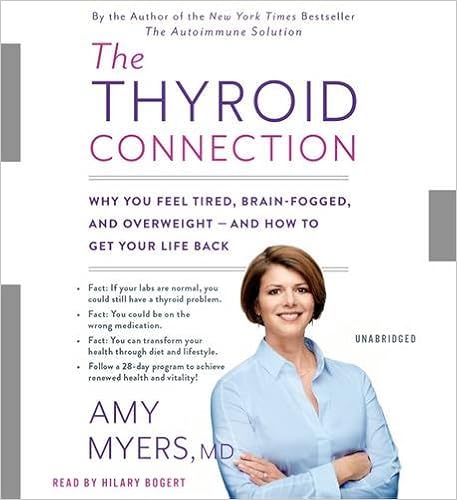 Dr. Amy Myers was born in Louisiana and raised in a well healthy lifestyle home where her meals were organic foods. During her second year of medical school, she was diagnosed with Grave’s Disease (toxic diffuse goiter). She went through another path and worked with a doctor of Chinese medicine. Dr. Myer received her Doctorate in Medicine and worked her way for five years in emergency medicine. She has helped many people recover from thyroid condition based on her program. Dr. Myer is a prominent leader in Functional Medicine. She has authored numerous books, which include, “The Autoimmune Solution,” and “35 Recipes to Heal your Gut”. Also, she was announced as New York Times best seller author. She is a host of the upcoming summit “The Myers Way: Thyroid Connection Solution,” a free online summit and her latest TV show “28 Metabolism Makeover”. Dr. Myers currently has her office “Austin UltraHealth” in Austin, Texas, specializing IN Naturopathic/Holistic, and Nutritional Health.

 y (RAI or I-131) is taken as liquid or capsule form. The radiation is used to destroy the thyroid cells that are using too much iodine instead of surgically removing the thyroid gland. After a couple of days later, I underwent the radioactive therapy. I was given a radioactive capsule and approximately three hours preceding the treatment; I was sent home. I was giving specific instruction to minimize immediate close contact for a minimum of seven days, specifically of contact and body fluids such as saliva and other excretions. The hardest part of being isolated for seven days is seeing my son’s little face (he was then six years old) trying to open the door and asking me why he couldn’t come in or if I was sick. That broke my heart, but I explained the situation to him, and he became the best nurse a mother can ask for.
 id hormone where it causes an enlargement of the thyroid gland called goiter. Hyperthyroidism is caused by a high amount of iodine, inflammation the thyroid gland, which makes thyroid hormones (T4 and T3) to come out from the gland.

